
Hook is a perfect example of an indie game done right: a single, focused idea, with clean execution. At first blush, Hook seems like a digital version of those Cracker Barrel puzzles, the ones where you’re trying to get the metal ring off of some horseshoes fused together; virtual pins interlock on your screen, and you must remove them in the correct order to clear the challenge and advance. A pin is wired to a button, and pressing the button removes the pin. If the pin is blocked, you restart the challenge. Success is achieved by adjusting the wiring between button presses, so that the retract signal only goes to the desired pin.
The gameplay is simple and intuitive, allowing the design to shine. The artwork is clean and minimalist; the animation, delightful. The motion is smooth, the sounds are pleasant, and the board cleans itself as you remove elements.
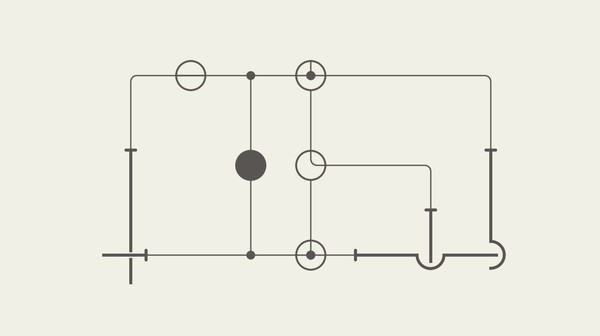
While the puzzles increase in complexity, it ultimately all boils down to finding the first pin, and keeping your wiring clean. I completed most of the challenges in one go, but there were several where I didn’t fully trace my wiring and had to reset a few times. I completed all fifty puzzles in just under an hour, but your mileage may vary.
In all, it was a pretty satisfying experience. I’m looking forward to letting my kids try and puzzle through it. It’s a great introduction to logic gates and switches, so it’s decently STEMmy without needing any reading skills.
It’s selling for $0.99 on Steam, about the price of a candy bar. Skip the candy bar, and give it a try.
See you next week!
 Snack Money Gaming
Leave a comment